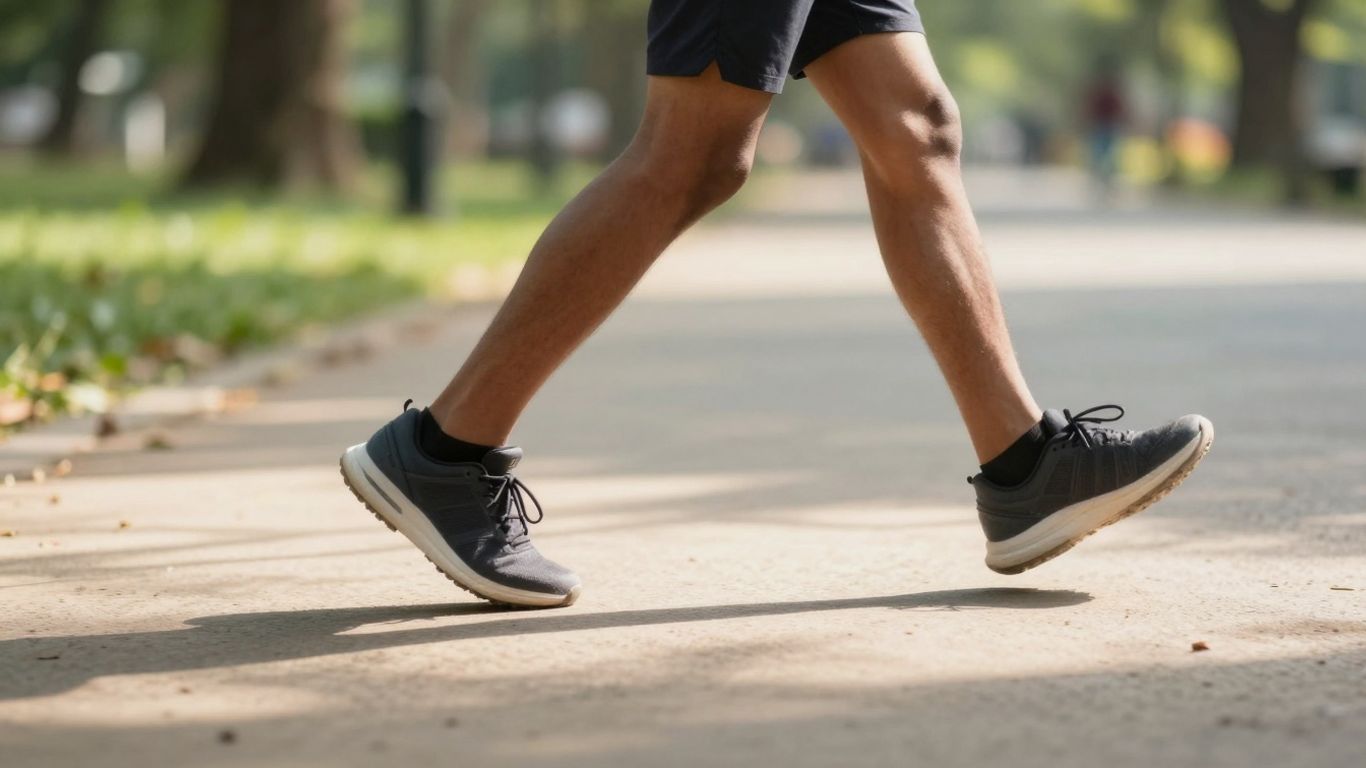
Walking is seriously one of the best things you can do for your health. It can actually help you live longer, feel less anxious and depressed, and even lower your stress levels. Plus, it’s great for your digestion and can give your immune system a boost.
Key Takeaways
- Walking under 2,000 steps a day increases disease risk.
- Around 4,500 steps show cardiovascular benefits.
- Over 7,000 steps significantly improve health and longevity.
- Walking after meals helps manage blood sugar.
- Morning walks can lower high blood glucose.
- Walking activates muscles, improves mood, and aids weight loss, especially belly fat.
- Brisk walking and uphill walking offer greater benefits.
- Backward walking strengthens knees, ankles, and hips.
- Nasal breathing during walks improves oxygen efficiency.
- Mindful walking without distractions reduces stress.
- Hypoxia training (breath-holding) can strengthen the body and reduce inflammation.
- Avoid leaning too far forward, wearing uncomfortable shoes, poor timing, and overtraining.
The Science Behind Steps
Research shows that if you’re taking fewer than 2,000 steps a day, which is about a mile, your risk of developing diseases starts to go up. Once you hit around 4,500 steps, a little over 2 miles, you begin to see benefits for your heart and blood vessels. But if you push past 7,000 steps, you’ll notice even more health improvements, including a longer lifespan.
It’s important to remember that just sitting for long periods and then going for a short walk isn’t quite enough to cancel out the negative effects. You need consistent movement.
Walking And Your Blood Sugar
Walking after you eat can really help your body deal with any extra sugar you’ve consumed. And if you wake up with high blood sugar, a morning walk can help bring it down. This is good because it prevents that excess sugar from turning into fat.
Mood, Weight, And More
When you walk, you activate your muscles, and this can make a big difference for mood issues like depression. It’s a low-stress activity that gets a lot of oxygen into your system. Believe it or not, walking can lower high blood pressure, similar to medication. It also helps with weight loss, particularly that stubborn belly fat, also known as visceral fat.
If you’re trying to lose weight, instead of just watching the number on the scale, try measuring your waist at the belly button. You should see a noticeable decrease in belly fat if you’re walking regularly.
Walking while you’re fasting can also boost the benefits. So, if you practice intermittent fasting and don’t eat until noon, a morning walk can be really effective.
Boosting Your Walking Benefits
To get even more out of your walks, try walking briskly. Even if you take the same number of steps, walking faster leads to better results. Adding intensity by walking uphill or climbing stairs can also increase the benefits.
A study from Japan in 2017 found that alternating between 3 minutes of fast walking and 3 minutes of normal walking, repeated five times, had a significant impact on blood pressure and leg strength. This type of interval walking for 30 minutes provided more benefits than an hour and a half to two hours of regular walking.
Another interesting technique is walking backward. This can strengthen your knees, ankles, and hips. Some people also find it improves cognitive function and balance. Just be sure to do this in a safe place where you won’t trip.
Try to breathe through your nose as much as possible while walking. This can increase carbon dioxide levels in your body, which helps your body use oxygen more efficiently.
Walking For Stress Relief
Walking is a fantastic way to combat the stress of daily life. When I go for a walk, I leave my phone and music at home. Instead, I focus on using all my senses. I look at the trees, the colors, the sky, and the details on the ground. I pay attention to all the different sounds and smells around me. This helps me stay present and calm. It might take 30 minutes to an hour, but this mindful approach can really help you de-stress.
Advanced Walking Techniques
For those looking to push their limits, there are advanced techniques. One is a form of hypoxia training, similar to how athletes train at high altitudes. You can mimic this by syncing your breath with your steps: inhale for three steps and exhale for four steps. Periodically, you can also try holding your breath for 5 to 10 seconds every few minutes. This type of training can trigger genes that strengthen your body, reduce inflammation, and improve recovery.
Common Walking Mistakes To Avoid
There are a few common mistakes people make when walking:
- Leaning too far forward: This can put extra strain on your upper back muscles.
- Wearing uncomfortable shoes: Make sure your footwear is supportive and comfortable.
- Poor timing: Walking right after a heavy meal might not be as effective for blood sugar management as walking a bit later.
- Overtraining: Going for excessively long walks every day without allowing your body to recover can lead to soreness and injury. It’s important to let your body rest and rebuild.
By incorporating these tips and avoiding common pitfalls, you can truly maximize the health benefits of simply walking.
Leave a Reply